Commercial Concrete Flooring Options for Corridor Businesses
Retail, warehouse, office, and shop floors across the Cedar Rapids to Iowa City corridor all ask different things of concrete. Here is how the main systems compare and how to match one to your space.
The Main Systems
The Main Commercial Concrete Flooring Systems
Most commercial floors we work on across the corridor end up in one of four systems: diamond polished concrete, an epoxy coating system, a sealed and caulked slab, or a full refurbishment of concrete that has already lived a hard life. Each has a place, and the right answer depends on traffic, moisture, and how the space is used day to day.
Diamond Polished Concrete
A mechanically ground and polished slab with no coating to peel. Strong fit for retail, showrooms, schools, and offices that want a clean look with low ongoing maintenance.
Epoxy Flooring Systems
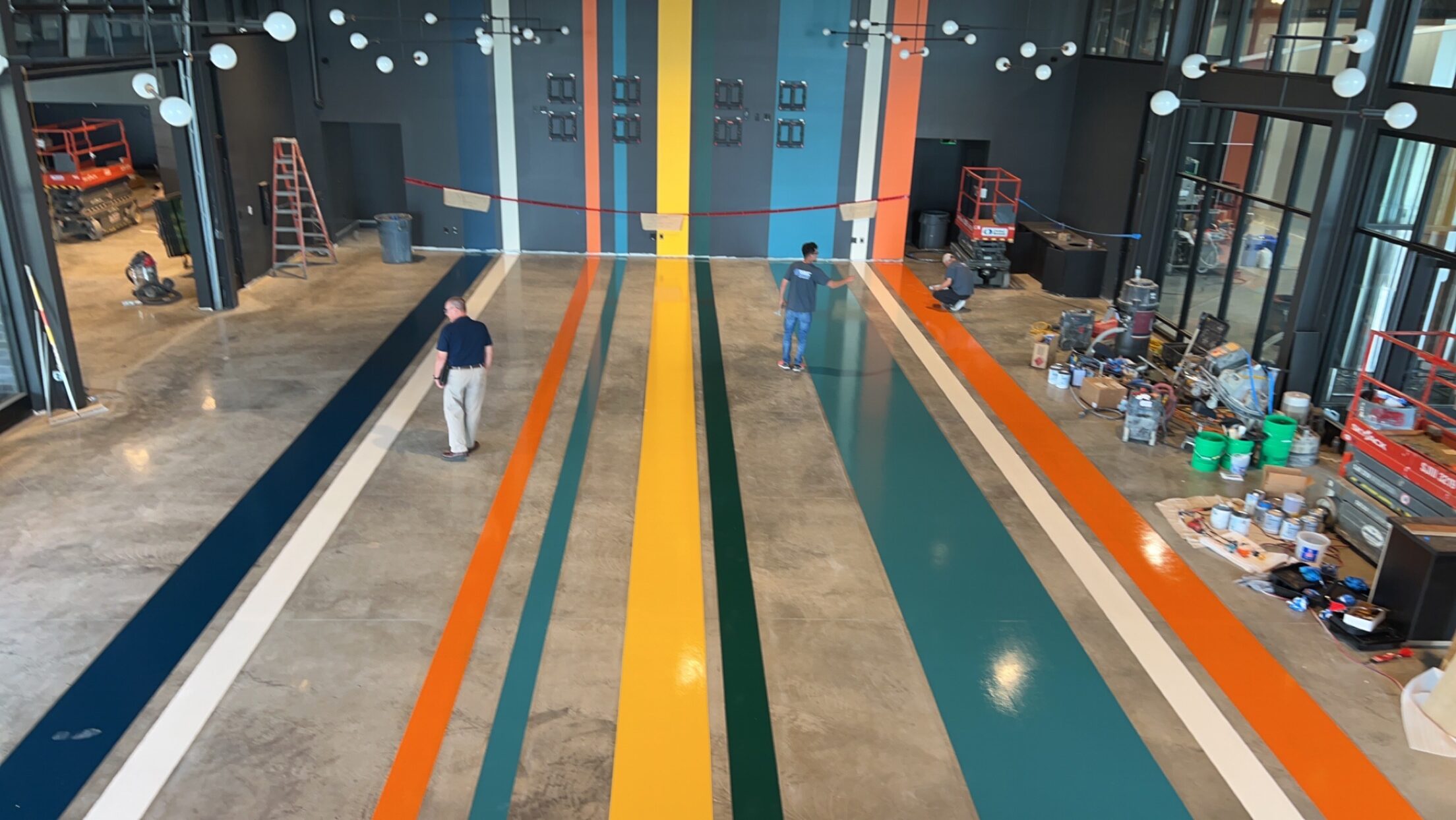
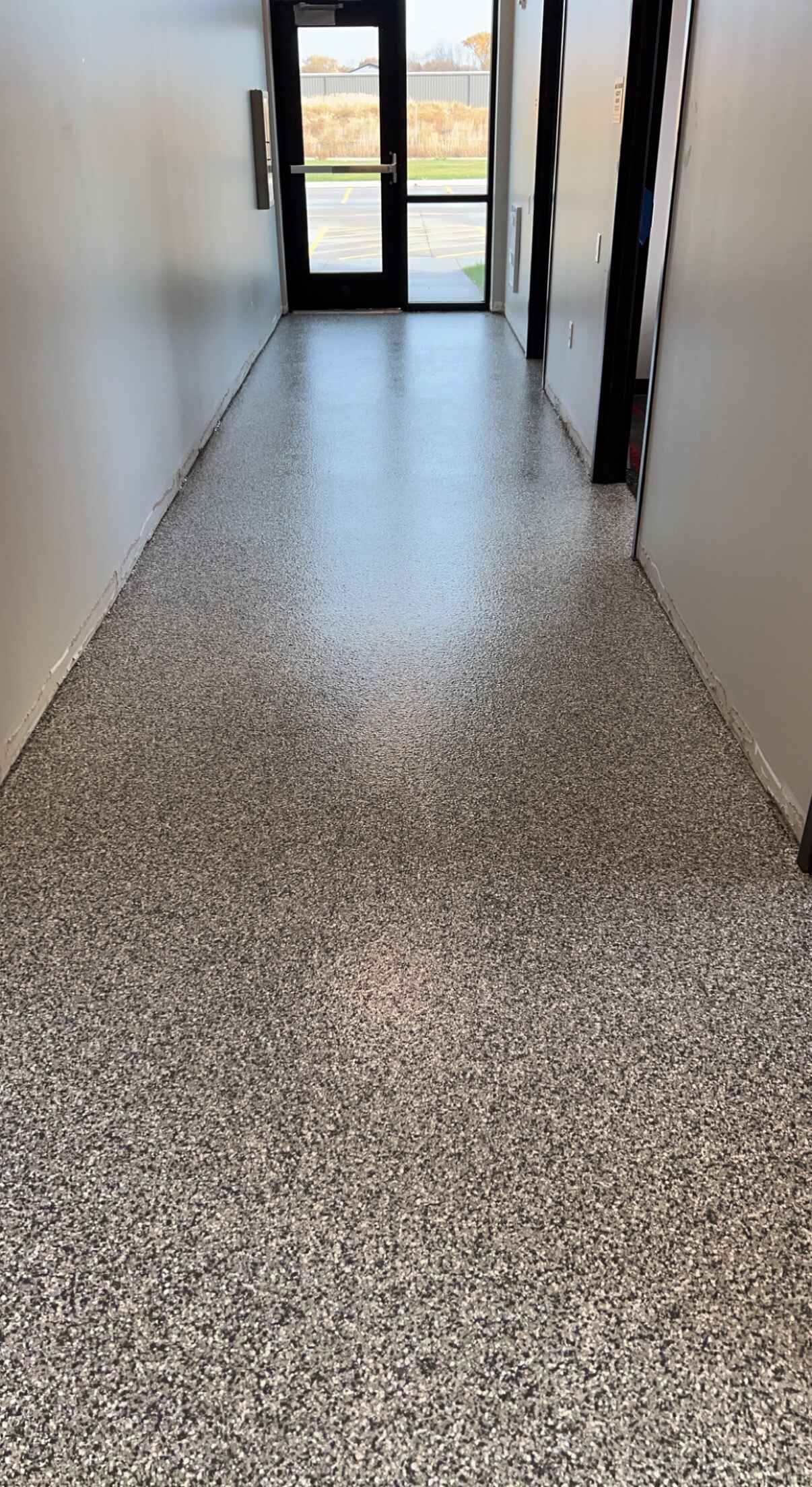
A resin coating build, from solid color to decorative flake. Handles chemicals, rolling loads, and frequent washdowns in shops, kitchens, and service bays.
Concrete Sealing
Penetrating or film-forming sealers that protect slabs from moisture, salt, and stains while keeping a natural concrete look.
Joint Caulking
Filled and sealed joints that keep water, salt, and debris out of the slab and stop joint edges from spalling under cart and forklift traffic.
Concrete Refurbishment
Grinding, patching, and resurfacing for slabs with coatings failing, surface damage, or years of wear, bringing them back to a serviceable finish.
Maintenance Cleaning
Scheduled deep cleaning that keeps finished floors performing and looking right between larger service intervals.
If you want a deeper comparison of the two most common commercial systems, read our breakdown of diamond polished concrete vs. epoxy for commercial spaces, or see the system details on our diamond polished concrete flooring and epoxy flooring systems pages.
Matching System to Space
Matching the System to the Space
A polished floor in a boutique on the North Liberty corridor has different demands than an epoxy floor in a Tiffin service shop. Retail and office spaces usually favor polished concrete for its appearance and simple upkeep. Spaces with oils, chemicals, or wheeled equipment usually favor an epoxy build with the right topcoat.
We see this split clearly in the communities where corridor businesses are growing. Our work on commercial concrete flooring in North Liberty leans heavily toward retail, office, and restaurant spaces, while commercial concrete flooring in Tiffin often involves newer commercial builds along the Highway 6 corridor that need durable floors from day one.
On the Cedar Rapids side, commercial concrete flooring in Robins tends to be shops, storage, and light industrial spaces where impact and abrasion resistance matter most. In commercial concrete flooring in Coralville, we see a mix of retail buildouts and back-of-house spaces that need floors able to handle constant foot traffic and frequent cleaning.
Local Conditions
Iowa Conditions That Affect Commercial Floors
Eastern Iowa floors work harder than most. Freeze and thaw cycles track moisture into entryways all winter. Road salt and parking lot grit grind into the surface from November through March. Agricultural dust works into every seam during harvest season. Any commercial floor system here has to be specified with those conditions in mind, from the sealer chemistry to the joint fill, or it will not hold up the way the product sheet promises.
That is why we start every commercial project with a moisture test and a close look at how the building actually runs. A floor that fails early is almost always a floor where the slab conditions were guessed at instead of measured.
The Process
What a Commercial Project Looks Like
Walkthrough and slab evaluation. We measure moisture, hardness, and flatness, and look at existing coatings or damage before recommending a system.
Written scope and phasing plan. You get a clear sequence of work, including how we keep your business operating around the project.
Surface preparation. Grinding or shot blasting to the profile the system requires. This step decides how long the floor lasts.
System installation. Polishing passes, coating builds, or sealing, applied to manufacturer specification.
Cure and reopen plan. Realistic timelines for foot traffic, carts, and full service so the floor is never loaded too early.
Maintenance guidance. A simple care plan matched to the system so the floor keeps its finish for years.
Common Questions
Frequently Asked Questions
Most commercial spaces we work on take between two and five working days depending on size, slab condition, and the system. We phase the work so most businesses can keep operating in some capacity during the project.
For most retail and customer-facing spaces, polished concrete wins on appearance and lifetime maintenance cost. Epoxy is the better call where chemicals, grease, or constant washdowns are part of daily operations.
Usually not directly. Failing coatings need to be removed by grinding so the new system bonds to sound concrete. We assess the existing surface during the walkthrough and include removal in the scope where needed.
Polished floors need regular dust mopping and periodic burnishing. Epoxy floors need prompt cleanup of chemicals and a soft-bristle scrub routine. We leave every commercial client with a care plan specific to their system.
Yes. We regularly phase projects for nights and weekends, and we plan cure windows so your busiest areas are back in service as fast as the materials safely allow.
Keep Reading
More From the DCS Blog
Related Articles
Every project starts with an on-site look at the slab, the space, and how you use it.
Plan Your Commercial Floor With a Local Crew
Tell us about your space and how it is used, and we will recommend the system that fits your traffic, your budget, and your timeline.
(319) 558-8316