Polished Concrete vs. Epoxy Flooring: Which Is Better for Your Space?
Polished concrete and epoxy are the two finishes people compare most for homes, shops, and businesses. Here is how they differ, where each one wins, and how to pick for your space.
The short answer
- Polished concrete is the slab itself, ground and polished. There is no coating to peel.
- Epoxy is a coating that adds color, texture, and stronger chemical resistance.
- Polished suits clean, bright interiors. Epoxy suits garages, shops, and spaces with chemicals or heavy wear.
- Slab condition and moisture decide what is possible, so an on-site look comes first.
The Core Difference
Polished Concrete Is the Slab. Epoxy Is a Coating.
That one sentence explains most of the tradeoffs. Polished concrete is made by grinding the existing slab through progressively finer diamond abrasives until it takes on a smooth sheen. Epoxy is a resin coating that is applied on top of a prepared slab.
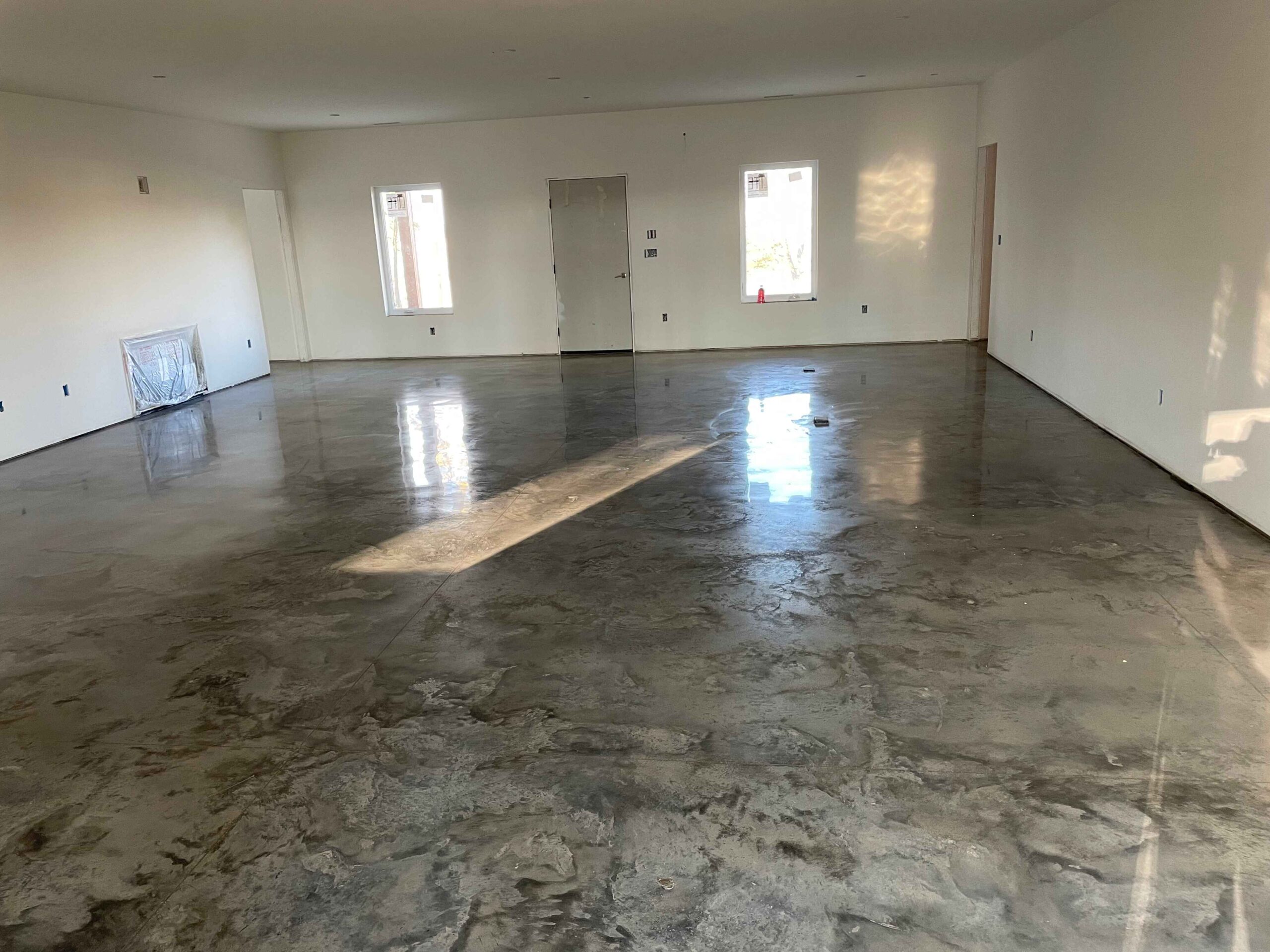
Because polishing works with the concrete itself, the look comes from the slab: its aggregate, its character, and its natural color or stain. Because epoxy is a coating, you choose the look: solid color, decorative flake, or metallic. If you want the full picture of the polished side, see our diamond polished concrete flooring page.
Comparison
Polished Concrete and Epoxy, Side by Side
| Polished concrete | Epoxy flooring | |
|---|---|---|
| What it is | The existing slab, ground and polished | A resin coating applied over a prepared slab |
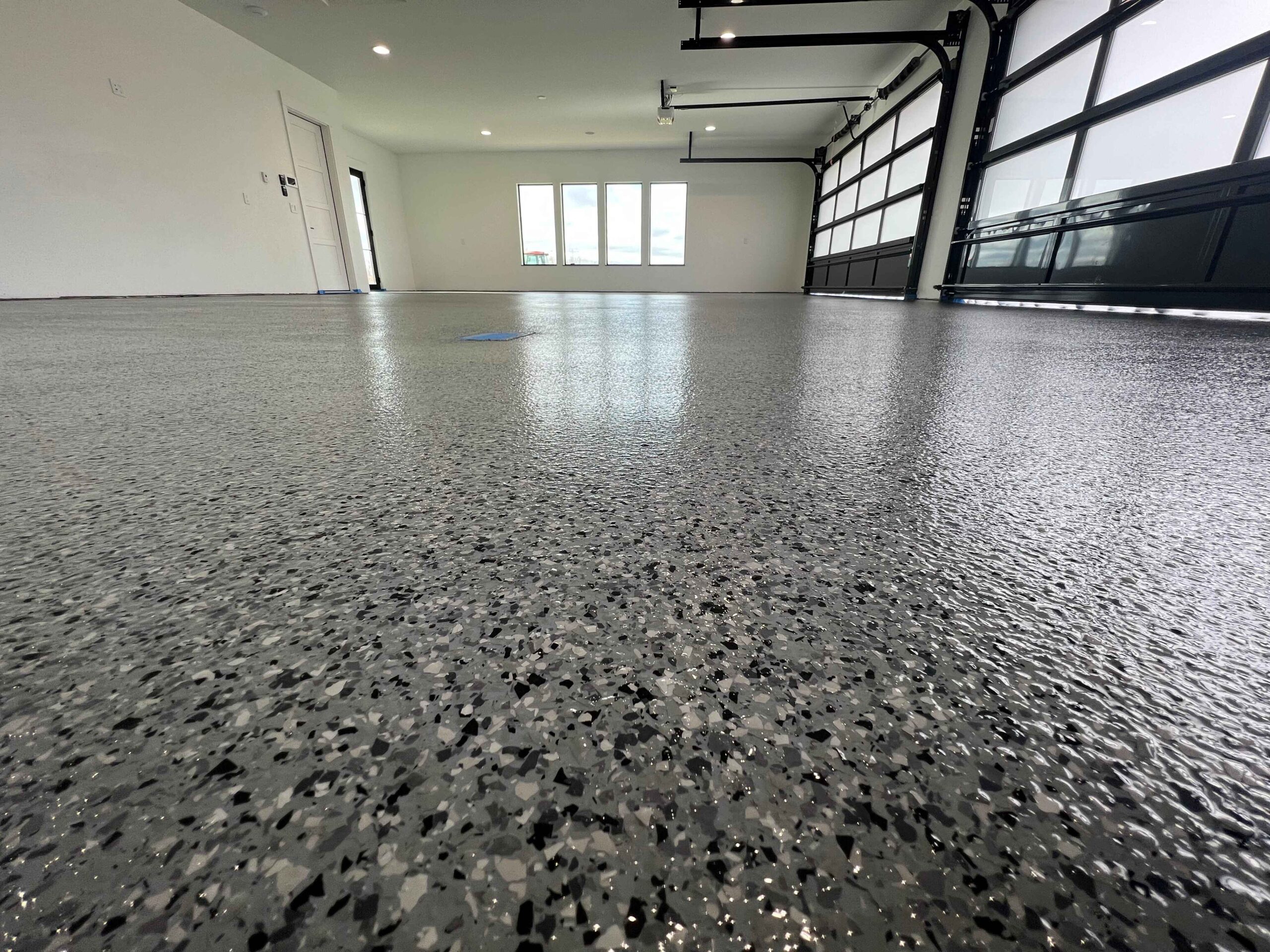
| Look | Natural sheen. Can be stained for color | Solid color, decorative flake, or metallic finishes |
| Peeling risk | No coating, so nothing to peel | Rare when the slab is prepared correctly. Prep and moisture are the key |
| Chemical and stain resistance | Good with sealer and care | Strong. Built to resist oil, salt, and many chemicals |
| Traction | Can be slick when wet depending on finish | Flake and additives add traction by design |
| Maintenance | Routine cleaning. Can be re-polished | Routine cleaning. Worn areas can be recoated |
| Moisture | Works best on slabs that do not have moisture problems | Systems can be matched to slab moisture conditions |
General comparison. Your slab and use determine what is right for a specific space.
By Space
Best Choice by Space
Here is how we usually think about it when a homeowner or business owner asks which way to go.
Garages
Usually epoxy. Oil, road salt, and hot tires are hard on bare or polished concrete. See garage floor epoxy in Iowa City.
Basements
Moisture is the first question. Coated systems can be matched to the slab. See basement floor coatings.
Retail and offices
Often polished. A clean sheen and simple upkeep suit showrooms and offices. We compare both in our commercial guide.
Shops and service areas
Often epoxy. Chemicals, wheeled equipment, and washdowns favor a resin coating.
Living areas
Either one. Polished concrete with stain gives a natural look. Epoxy gives color control. See concrete staining for color on polished slabs.
Not sure?
That is normal. We look at the slab and talk through how you use the space before recommending anything.
Local Conditions
Iowa Conditions to Plan For
Slab moisture and salt decide a lot. Eastern Iowa slabs deal with freeze and thaw cycles, humidity in summer, and road salt in winter. Before we recommend a finish, we evaluate the concrete, because a floor that fails early is usually one where the slab was guessed at instead of checked.
If you want to see what our floors look like in local homes and businesses, browse our epoxy flooring in Iowa City and polished concrete floors in Iowa City pages.
Common Questions
Frequently Asked Questions
Neither is better in every case. Polished concrete is ground and polished from the slab itself, so there is no coating to peel. Epoxy is a coating system that adds color, texture, and chemical resistance. The right choice depends on the space and how you use it.
Most garages do better with a coating, because epoxy systems resist oil, road salt, and tire marks and can add traction with decorative flake. Polished concrete can work in a garage that sees lighter use and a clean look is the goal.
Both are easy to keep clean. Polished concrete is usually dust-mopped and damp-mopped, and it can be re-polished over time. Epoxy wipes clean and resists stains, and wear in heavy-use areas can be recoated.
Polished concrete can be slick when wet, depending on the finish level. For wet or high-traffic areas, we can talk through finish options and traction. Epoxy flake systems add traction by design.
Peeling usually comes from poor surface preparation or moisture in the slab. That is why we grind the concrete and evaluate moisture before any coating goes down.
It depends on the condition of your slab, the size of the space, and the finish you want. We give you a written quote after seeing the floor, so you can compare options on real numbers.
Both offer options. Polished concrete can be stained for color. Epoxy offers solid colors, decorative flake, and metallic finishes. We can walk you through samples during your evaluation.
Keep Reading
More From the DCS Blog
Related Articles
Every project starts with an on-site look at the slab, the space, and how you use it.
Let's Look at Your Floor Together
Tell us about the space. We will check the slab and help you choose between polishing and a coating.
(319) 558-8316