Epoxy vs. Polyaspartic Garage Floor Coatings: What's the Difference?
Epoxy and polyaspartic are the two coatings you will hear about most for a garage floor. Here is what each one does, where each one is strongest, and why many Eastern Iowa garages end up with both.
The short answer
- Epoxy builds thickness and bonds strongly to prepared concrete.
- Polyaspartic cures fast and resists UV, scratches, and chemicals, so it makes a strong topcoat.
- Many garages use both: an epoxy base with a polyaspartic topcoat.
- Surface preparation matters more than the product name on the bucket.
The Basics
The Two Coatings, Plainly
Epoxy and polyaspartic are both two-part resin coatings that turn a bare concrete slab into a sealed, easy-to-clean floor. They behave differently once they are down, and knowing how helps you ask better questions when you compare quotes.
Epoxy
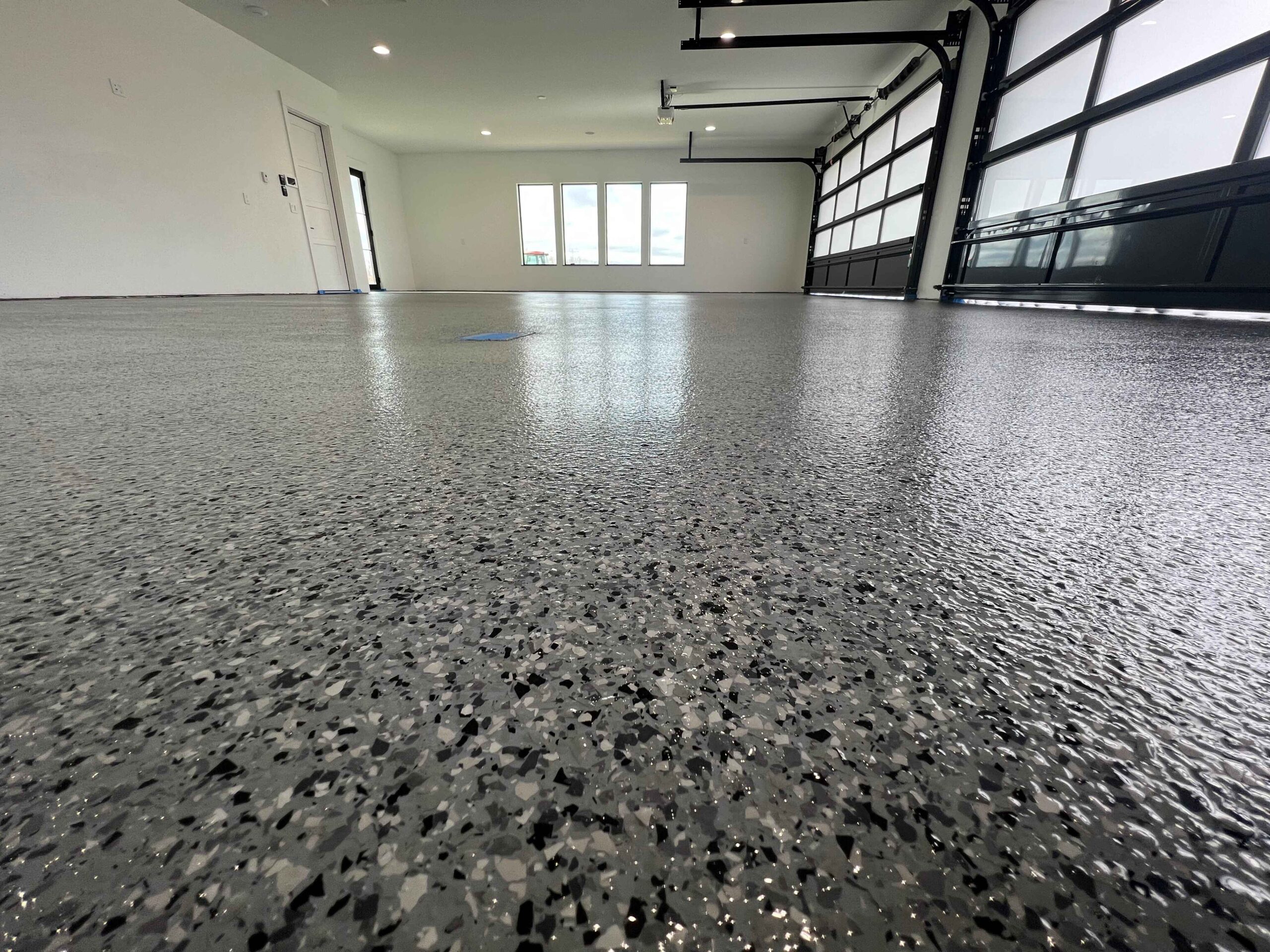
A resin system known for strong adhesion and the ability to build thickness. It is the base layer in most decorative flake garage floors.
Polyaspartic
A fast-curing, UV-stable resin. It is most often used as the clear topcoat that protects the layers underneath.
Epoxy plus polyaspartic
The layered approach: epoxy for body and bond, polyaspartic for UV stability, scratch resistance, and chemical resistance.
Comparison
Epoxy and Polyaspartic, Side by Side
This table shows how the two coatings usually compare. Specific products vary, so treat it as a guide for your conversation with an installer.
| Epoxy | Polyaspartic | |
|---|---|---|
| Main role | Base coat that bonds to the slab and builds thickness | Topcoat for UV stability, scratch resistance, and chemical resistance |
| Cure time | Slower. Often 24 to 72 hours before light foot traffic | Faster. Can shorten the wait before the floor returns to service |
| Sunlight | Can amber over time in direct sun | UV stable, so it keeps its clarity |
| Film build | Thicker, which helps hide small slab imperfections | Typically thinner per coat |
| Install window | More forgiving working time during application | Fast cure means installers need to work efficiently |
| Best used | As the foundation of the system | As the finish layer over the base |
General comparison of coating types. Final system recommendations depend on your slab, your garage, and your goals.
Local Conditions
What Iowa Garages Put These Coatings Through
Garage floors here take a beating from November to March. Road salt rides in on tires, meltwater sits on the slab, and freeze and thaw cycles stress every coating bond. Summer brings hot tires, UV through the garage door, and humidity swings. A coating that handles all of it needs a well-prepared slab first and a durable finish layer second.
That is why we grind the concrete before any coating goes down, and why we pair an epoxy base with a polyaspartic topcoat on our garage floor systems. For a closer look at how long these floors hold up in our climate, read how long an epoxy floor lasts in Iowa.
Choosing
Which One Fits Your Garage
Most homeowners do not have to choose one or the other. The better question is how you want the floor to look and what it needs to survive.
Everyday family garage
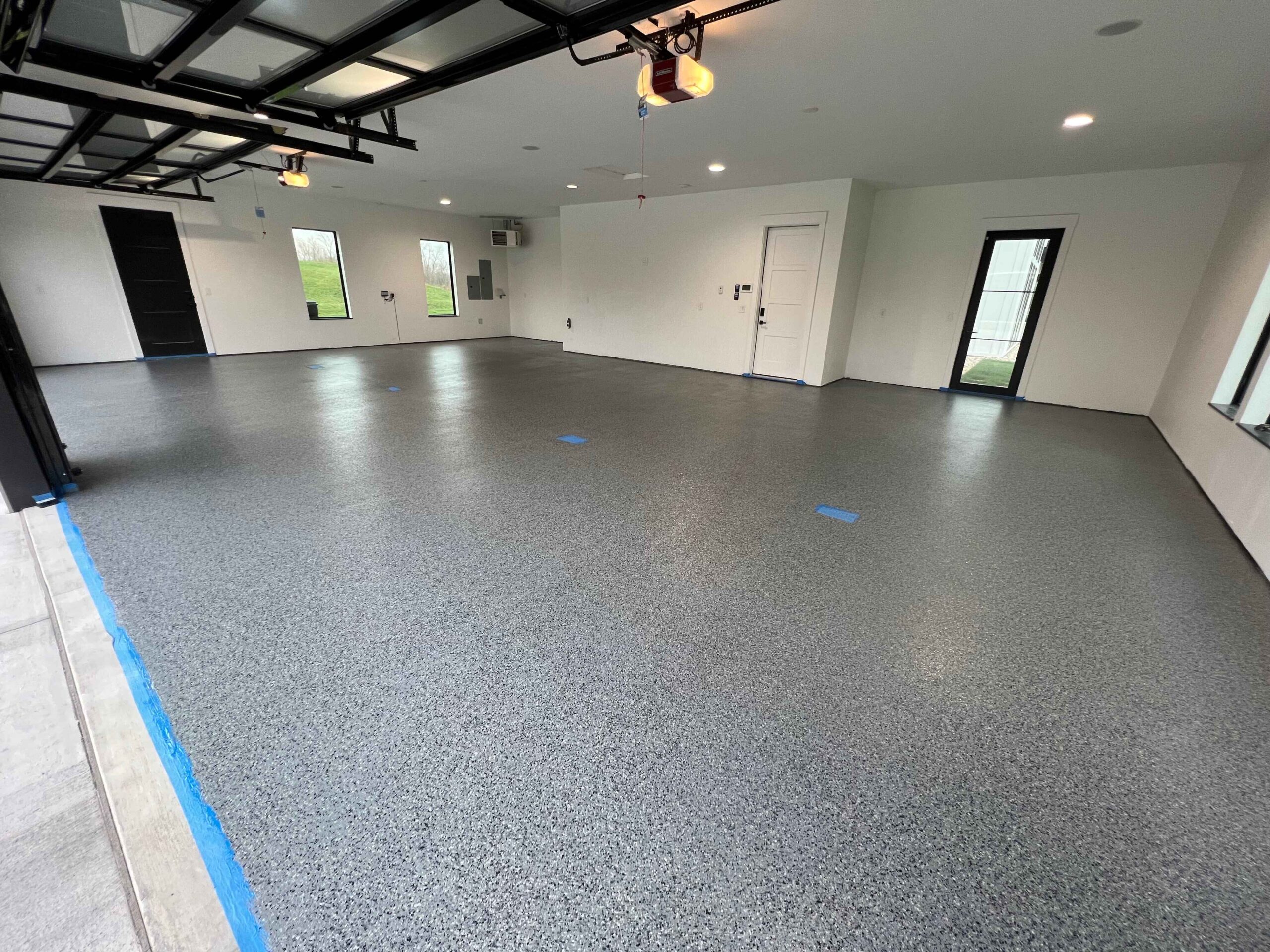
Epoxy base with a polyaspartic topcoat
This is our standard garage system. The epoxy gives you the bond and body, the topcoat gives you UV stability and scratch and chemical resistance, and decorative flake adds traction and hides dirt.
Workshop or detached shop
Talk to us about the build
Heavy tools, jack stands, and chemicals raise the bar. We evaluate the slab and your use, then recommend the system and finish that fits.
Ready to compare in person? See our garage floor epoxy in Iowa City and epoxy flooring in Cedar Rapids pages, or read garage floor coatings for small-town Iowa homes.
The Process
What Installation Involves
Slab evaluation. We check moisture, cracks, and existing coatings before choosing a system.
Diamond grinding. Mechanical prep opens the concrete so the coating can bond. This step drives how long the floor lasts.
Crack and joint repair. Cracks and damaged areas are filled and leveled before any coating goes on.
Epoxy base coat. The base layer bonds to the slab and builds the body of the system.
Decorative flake broadcast. Optional color flakes add traction, texture, and a finished look.
Polyaspartic topcoat. The clear finish layer seals everything and adds UV stability and scratch and chemical resistance.
Cure and return to service. We give you a clear timeline for foot traffic and vehicles.
Common Questions
Frequently Asked Questions
Epoxy is a thick, strongly bonding resin that builds the body of a coating system. Polyaspartic is a fast-curing, UV-stable resin that is most often used as a clear topcoat. They are different chemistries with different strengths, and they are commonly layered together.
Yes. Our garage floor systems pair an epoxy base coat with a polyaspartic topcoat for UV stability, scratch resistance, and chemical resistance. During your evaluation we will confirm the exact system that fits your slab and how you use the garage.
Polyaspartic cures faster. Epoxy systems typically need 24 to 72 hours before light foot traffic, while polyaspartic topcoats can shorten that timeline noticeably. Exact times depend on temperature, humidity, and the system installed.
A polyaspartic topcoat adds UV stability and abrasion and chemical resistance on top of the epoxy base. Longevity still depends most on surface preparation, moisture conditions in the slab, and how the floor is used. Good prep matters more than any single product.
Epoxy that is exposed to direct sunlight can amber over time because it is not UV stable on its own. A polyaspartic topcoat blocks that effect, which is one reason it is a popular finish layer for garages with big doors and windows.
In some situations a polyaspartic-only system can work, but it builds less thickness than a layered system. We look at the slab, cracks, and your goals before recommending a build, so ask for an on-site evaluation before deciding.
It does not have to be. Decorative flake broadcast adds texture and traction, and anti-slip additives can be included in the topcoat. Tell us if wet shoes, a workshop, or kids on bikes are part of your garage routine.
Keep Reading
More From the DCS Blog
Related Articles
Every project starts with an on-site look at the slab, the space, and how you use it.
Not Sure Which System Fits Your Garage?
Tell us how you use the space. We will look at the slab and recommend a coating system that fits it.
(319) 558-8316